
What are you looking for?
Helping Preserve Space for Developing Permanent Teeth
When a baby tooth is lost earlier than expected, the surrounding teeth may shift into the available space. A space maintainer may be considered in selected children to help preserve the space needed for developing permanent teeth.
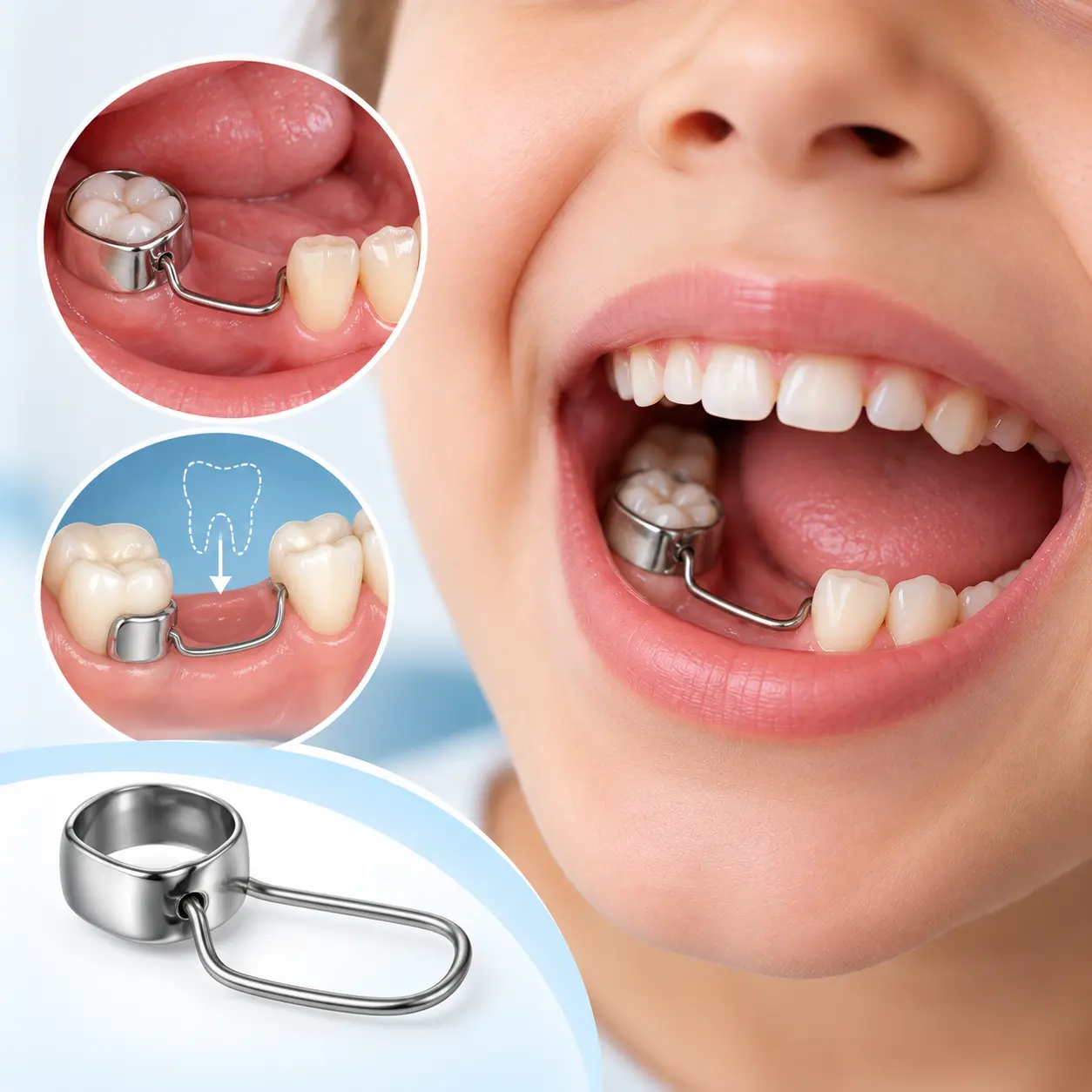
Protecting Space During Dental Development
Understanding When Space Maintenance May Be Needed
Premature Tooth Loss
A space maintainer may be considered when a baby tooth is lost earlier than expected and the permanent tooth has not yet erupted.
Space Preservation
It may help preserve the available space and reduce the risk of neighbouring teeth moving into the area.
Erupting Permanent Teeth
A space maintainer may be considered when developing permanent teeth have not yet erupted and space needs to be preserved.
Dental Development
During dental development, maintaining available space may help support the expected eruption path of permanent teeth.
Individual Assessment
In selected cases, space maintenance may support future eruption based on the child's dental development and individual requirements.
Maintaining Space While Permanent Teeth Develop
Different Appliances for Different Situations
Fixed Space Maintainers
These appliances are attached to selected teeth and remain in place while the space is being maintained.
Removable Space Maintainers
In selected cases, a removable appliance may be considered when appropriate for the child's dental development and ability to follow the recommended care routine.
A Considered Approach to Space Maintenance
Assessment
The child's teeth, dental development and the area where the primary tooth has been lost are assessed.
Records
Where appropriate, photographs, digital scans or other dental records may be used to understand the developing teeth and surrounding structures.
Treatment Planning
The information gathered is reviewed to determine whether space maintenance is appropriate and which appliance may be suitable.
Appliance Placement
If recommended, the selected space maintainer is placed according to the child's individual dental requirements.
Regular Monitoring
Follow-up appointments allow the appliance, dental development and available space to be reviewed.
Follow-Up
The appliance may be adjusted, removed or replaced when appropriate as the child's permanent teeth develop.
Caring for Your Child's Appliance
- Maintain good oral hygiene around the appliance.
- Follow the care instructions provided by the orthodontic team.
- Attend scheduled follow-up appointments.
- Take care when eating foods that may affect the appliance.
- Contact the clinic if the appliance becomes loose, damaged or uncomfortable.
Why Individual Assessment Matters
Have Questions? We Can Call You Back.
Leave your details below and our team will get in touch with you at your preferred time.
Our team will call you back to discuss your enquiry and help you with the next steps.
Frequently Asked Questions.
Find answers to common questions about space maintainers, their use, care and follow-up.
There is no single age that applies to every child. A space maintainer may be considered when a primary tooth is lost prematurely and maintaining the available space is considered appropriate.
If a baby tooth is lost earlier than expected, neighbouring teeth may move into the available space. A space maintainer may be considered to help preserve that space for the developing permanent tooth.
No. Not every child requires space maintenance. The decision depends on the child's individual dental development, tooth position and the circumstances surrounding the tooth loss.
A space maintainer is designed to fit around or against selected teeth. Some initial adjustment may be experienced after placement, but the child's individual experience can vary.
The duration varies depending on the child's dental development and the expected eruption of the permanent tooth. Regular monitoring helps determine when the appliance is no longer required.
Children may need to take care with certain foods that could affect the appliance. The orthodontic team can provide specific care and dietary instructions.
Parents should contact the clinic if the appliance becomes loose, damaged or uncomfortable so that it can be assessed and managed appropriately.
It may be removed when it is no longer required, depending on the development and eruption of the permanent tooth and the individual treatment plan.
The need for a space maintainer, appliance type and duration of use vary between children and are determined following an individual dental assessment.
Supporting Healthy Dental Development
If your child has lost a baby tooth earlier than expected, an orthodontic assessment can help determine whether space maintenance may be appropriate.