What are you looking for?
Braces for a Healthier, More Confident Smile
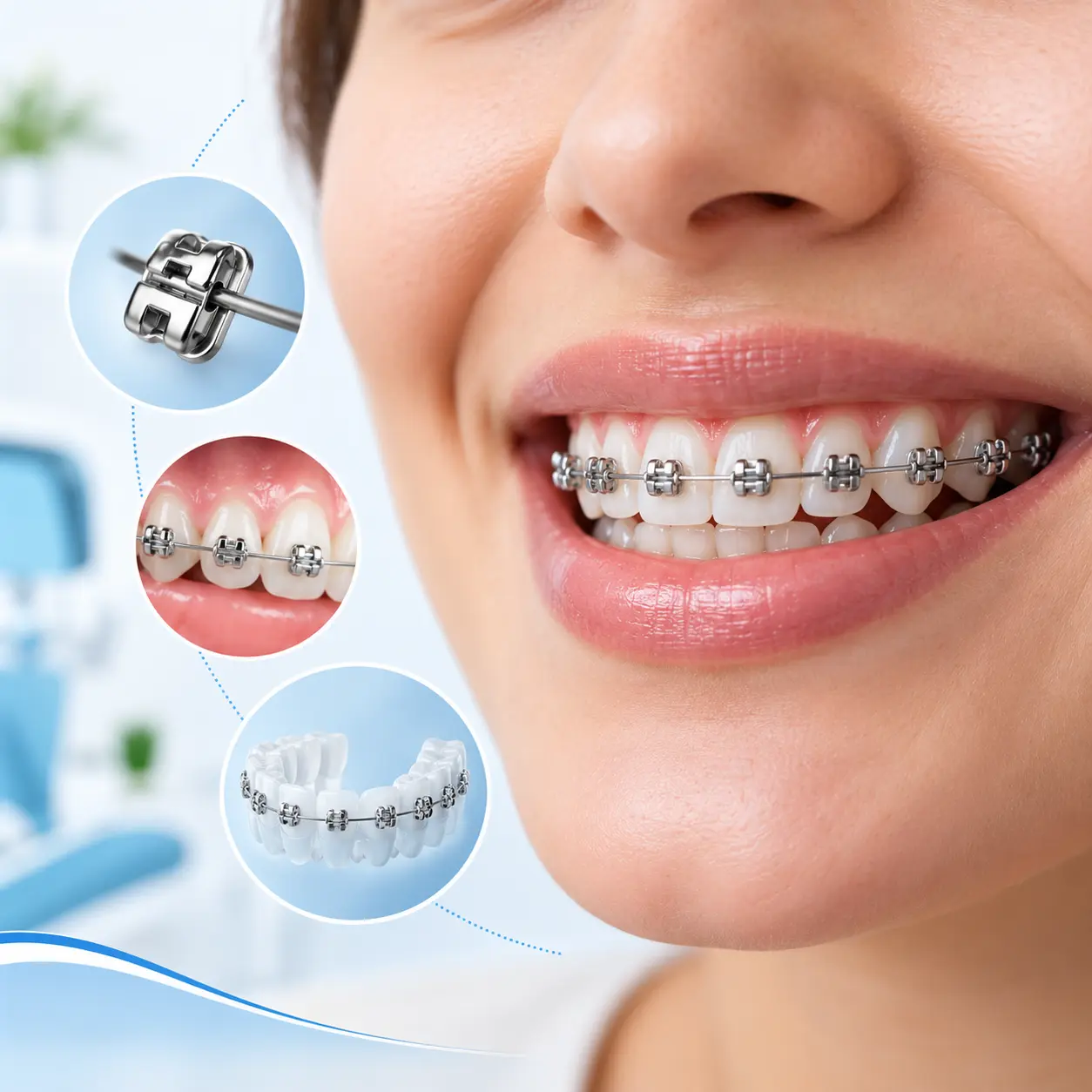
Braces are a fixed orthodontic treatment used to gradually move teeth into a more suitable position and improve tooth alignment and bite relationships. Treatment is planned according to your individual dental and orthodontic requirements.
A Tried-and-Trusted Approach to Orthodontic Treatment
When Braces May Be Considered
Crowded Teeth
Limited space can cause teeth to overlap, rotate or appear crowded. Braces may help gradually improve their alignment.
Spacing & Gaps
Spaces between teeth can occur for different reasons and may affect the alignment and appearance of the smile.
Overbite & Deep Bite
The upper teeth may overlap the lower teeth more than expected when the mouth is closed.
Underbite
The lower teeth may sit in front of the upper teeth when the teeth come together.
Crossbite
One or more upper teeth may sit inside the lower teeth when biting together.
Gradual, Controlled Tooth Movement
Braces use brackets, wires and other orthodontic components to apply controlled forces to the teeth. Over the course of treatment, these forces guide the teeth towards their planned positions.
Treatment is monitored regularly so that progress can be assessed and adjustments can be made when required.
Treatment Planned Around Your Smile
Fixed Orthodontic Treatment
Braces remain attached to the teeth throughout active treatment and are adjusted during regular appointments.
Controlled Tooth Movement
The orthodontic system is used to gradually guide the teeth towards their planned positions.
Improved Alignment
Treatment may help address concerns such as crowding, spacing and other alignment irregularities.
Bite Correction
Where appropriate, orthodontic treatment can also address certain bite relationships.
Individual Assessment
Treatment suitability and the appropriate orthodontic approach are determined following an individual assessment.
A Structured Approach to Orthodontic Care
Assessment
Your teenager’s teeth, bite, dental development and relevant orthodontic factors are assessed.
Digital Records
Where appropriate, photographs, digital scans and other records may be used to understand the teeth and support treatment planning.
Treatment Planning
The information gathered is reviewed to determine suitable treatment options based on the individual orthodontic requirements.
Treatment
If treatment is recommended, the selected approach is planned according to the patient’s dental development, needs and treatment goals.
Progress Reviews
Regular appointments allow treatment progress and dental development to be reviewed and the treatment approach adjusted when required.
Retention & Follow-Up
After active orthodontic treatment, retainers or further follow-up may be recommended depending on the individual case.
Designed for Controlled Orthodontic Correction
Fixed Treatment Approach
Braces remain in place during active treatment, providing continuous orthodontic force.
Improved Tooth Alignment
Treatment can help gradually improve the position and alignment of the teeth.
Bite Consideration
Braces may be used as part of treatment for certain bite relationships.
Individualised Treatment
The treatment plan is developed according to your teeth, bite and orthodontic requirements.
Treatment plans, timing and expected outcomes vary between individuals and depend on individual orthodontic assessment.
Living With Braces
Maintain Oral Hygiene
Keep your teeth and braces clean with regular brushing and appropriate oral hygiene.
Follow Care Instructions
Follow the instructions provided by your orthodontic team throughout treatment.
Attend Progress Appointments
Keep your scheduled appointments so your treatment progress can be reviewed.
Choose Foods Carefully
Take care when eating foods that may damage brackets, wires or other orthodontic components.
Report Any Damage
Contact the clinic if a bracket, wire or other component becomes damaged or uncomfortable.
Have Questions? We Can Call You Back.
Leave your details below and our team will get in touch with you at your preferred time.
Our team will call you back to discuss your enquiry and help you with the next steps.
Frequently Asked Questions.
Find answers to common questions about braces, orthodontic treatment and aftercare.
Braces are fixed orthodontic appliances used to gradually move teeth and improve their alignment and, where appropriate, bite relationships.
Braces may be considered for children, teenagers and adults when fixed orthodontic treatment is appropriate for their individual requirements.
Depending on the individual case, braces may be used to address concerns such as crowded teeth, spacing, overbite, deep bite, underbite and crossbite.
Treatment duration varies between patients and depends on the orthodontic concern, treatment approach, dental condition and response during treatment.
Yes. If braces treatment is undertaken, regular appointments are generally required to review progress and make adjustments when needed.
Not necessarily. Treatment suitability is determined following an individual orthodontic assessment.
Retainers may be recommended after active orthodontic treatment to help maintain the position of the teeth. The type and duration of retention can vary between patients.
Braces may be used to address certain bite relationships as well as tooth alignment. The appropriate approach depends on the individual orthodontic assessment.
Treatment suitability, duration and expected outcomes vary between patients and are determined following an individual orthodontic assessment.
Ready to Explore Braces?
A personalised orthodontic assessment can help determine whether braces are suitable for your teeth, bite and treatment goals.