
What are you looking for?
A Digital Approach to Orthodontic Treatment
A digitally planned orthodontic treatment using a series of custom-made, removable clear aligners to gradually move the teeth as part of an individual treatment plan.
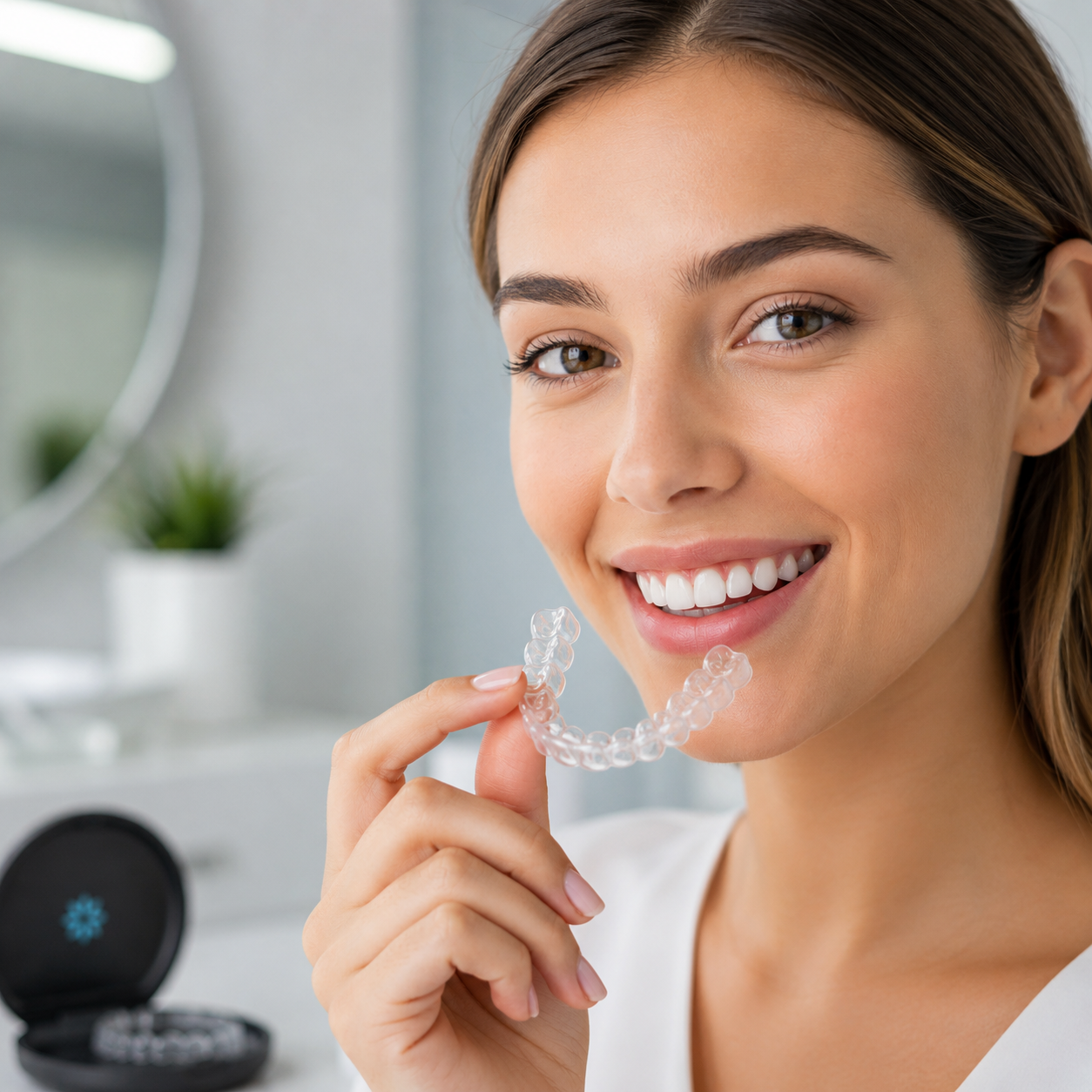
What is Invisalign?
From Assessment to Aligner Series
Assessment
Your teeth, bite and relevant clinical factors are assessed to determine whether clear-aligner treatment may be appropriate.
Digital Records
Digital records, including an intraoral scan where appropriate, may be used to create a digital representation of your teeth.
Treatment Planning
The information gathered is used to plan the proposed tooth movements and consider whether Invisalign treatment is suitable for your case.
Custom Aligners
A series of custom-made aligners is provided as part of the planned treatment. Each stage is designed to guide the teeth towards their planned positions.
Progress Review
Regular appointments allow treatment progress to be reviewed and the planned approach adjusted when required.
Retention
After active treatment, retainers may be recommended to help maintain the position of the teeth.
How Invisalign Works
Invisalign for Different Patients
Teenagers
Invisalign treatment may be considered for teenagers when their teeth, bite and stage of dental development are suitable for a clear-aligner approach.
Adults
Adults may consider Invisalign treatment for appropriate orthodontic concerns depending on their teeth, bite and overall clinical requirements.
Alignment Concerns
Invisalign may be used as part of treatment for certain alignment and bite-related concerns when clinically appropriate.
Individual Assessment
Suitability depends on the individual case, including tooth position, bite, dental development and treatment requirements.
Treatment Planning Starts With Understanding Your Teeth
Digital Scanning
An intraoral scanner can create a digital representation of the teeth without relying solely on traditional physical impressions.
3D Treatment Planning
Digital records can be used to help plan tooth movement and develop an individual treatment approach. Invisalign's treatment-planning workflow uses 3D models and ClinCheck® software as part of the planning process.
Visualising the Planned Approach
Digital treatment-planning tools can help communicate aspects of the proposed treatment and provide a clearer understanding of the planned tooth movements.
Digital technology supports treatment planning, but clinical assessment remains an important part of determining suitability.
What to Expect During Treatment
Regular Follow-Up
Appointments allow your orthodontist to review treatment progress and determine whether the planned approach is progressing appropriately.
Changing Aligners
You may progress through a series of aligners according to the treatment plan and instructions provided.
Temporary Pressure
Some patients may experience temporary pressure or mild discomfort when starting a new aligner.
Removability
The aligners can be removed for eating, drinking and oral hygiene, according to your orthodontist's instructions.
What Makes Invisalign Different ?
The appropriate treatment option depends on your teeth, bite, treatment requirements and individual orthodontic assessment.
Have Questions? We Can Call You Back.
Leave your details below and our team will get in touch with you at your preferred time.
Our team will call you back to discuss your enquiry and help you with the next steps.
Frequently Asked Questions.
Find answers to common questions about clear aligners, treatment planning, wearing aligners and follow-up.
Invisalign is a branded clear-aligner system that uses a series of custom-made, removable aligners to guide teeth as part of a planned orthodontic treatment approach.
Invisalign treatment uses a series of custom-made aligners. Each aligner is designed as part of the planned treatment to gradually guide the teeth towards their intended positions.
An intraoral scan may be used to create a digital representation of the teeth. Digital records can support assessment and treatment planning where appropriate.
ClinCheck® is Invisalign's digital treatment-planning software. It can be used as part of the planning process to help visualise the proposed tooth movements and treatment approach.
Adults may be considered for Invisalign treatment for appropriate orthodontic concerns depending on their teeth, bite and overall clinical requirements.
Invisalign treatment may be considered for teenagers when their teeth, bite and stage of dental development are suitable for a clear-aligner approach.
Invisalign may be used as part of treatment for certain alignment and bite-related concerns, including some cases of crowded teeth, when clinically appropriate.
Invisalign aligners are removable and can be taken out for eating and drinking as advised. Following the instructions provided for wearing and caring for the aligners is important.
Some patients may experience temporary pressure or mild discomfort, particularly when starting a new aligner.
Treatment duration varies between patients and depends on factors such as the individual orthodontic concerns, treatment approach and response during treatment.
Yes. Regular follow-up appointments allow treatment progress to be reviewed and the planned treatment approach to be monitored and adjusted when required.
Retainers may be recommended after active Invisalign treatment to help maintain the position of the teeth. The type and duration of retention can vary between patients.
Not necessarily. Suitability depends on factors including tooth position, bite, dental development and overall treatment requirements. An individual orthodontic assessment is required before treatment is recommended.
Invisalign suitability, treatment options and timelines vary between patients and are discussed following an appropriate orthodontic assessment.
Understand Your Options With an Individual Orthodontic Assessment.
Every orthodontic case is different. A consultation allows your teeth, bite and treatment requirements to be assessed before deciding whether Invisalign is an appropriate option for you.